
Resilience Starts with Well-Being (and Small Ways to Matter)
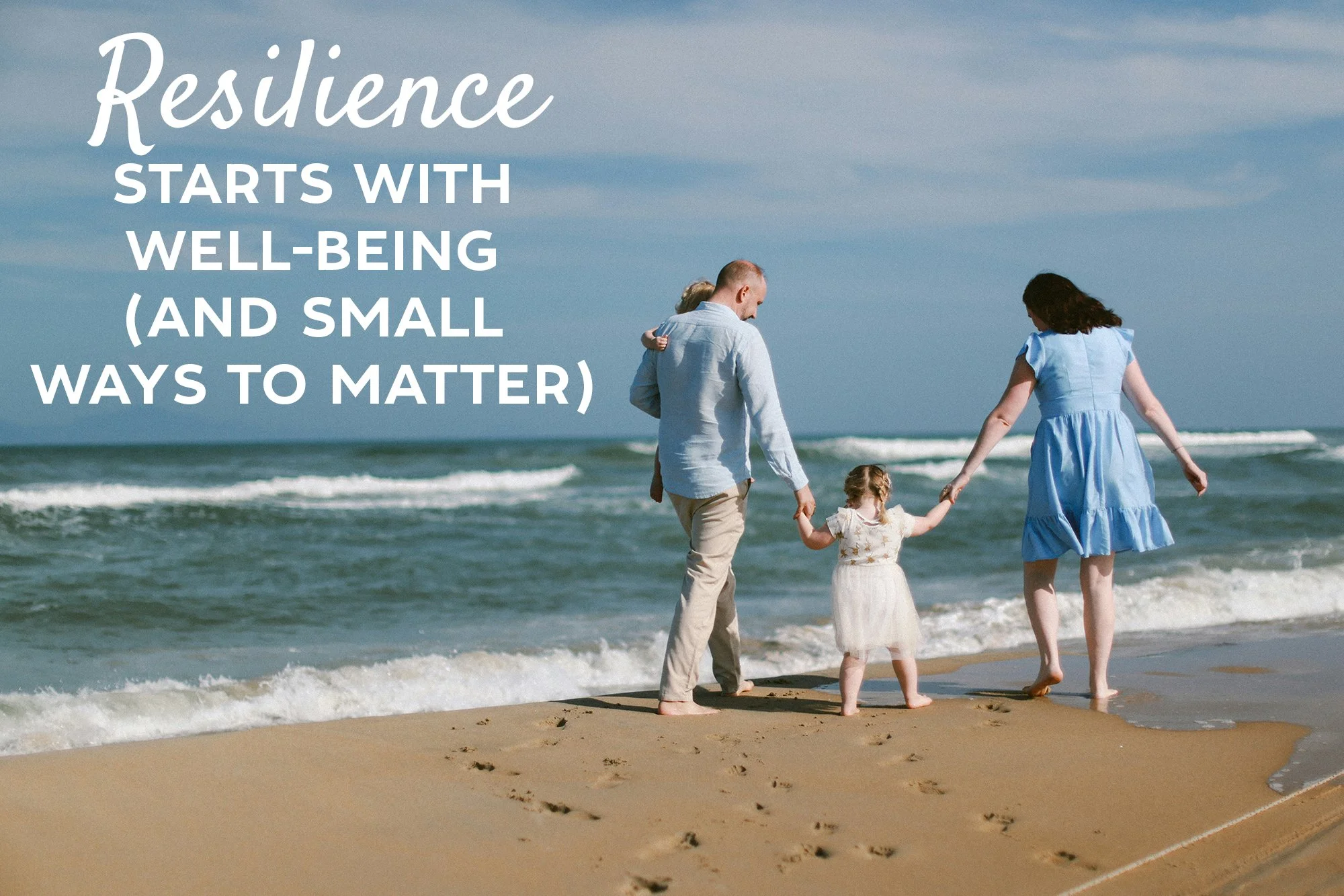
Photo by Hoi An and Da Nang Photographer on Unsplash.
Join the Project of the Week Community!
Every Thursday, I share a simple yet powerful action, habit, or project to help you boost your health, happiness, and overall well-being.
If you’ve been enjoying the Project of the Week newsletter, I’d love your help in spreading the word! Invite your friends and family to join us on this journey—just click HERE to sign up.
Together, we can create a ripple effect of positivity and growth!
PROJECT OF THE WEEK
Lately, so many conversations with parents start the same way:
The world feels like a lot right now.
There’s a heaviness in the air. The news cycle is intense. Big feelings are showing up in our kids—and in us. And many parents are quietly wondering: How do I help my child build resilience when things feel so uncertain?
That’s why I was so grateful to read a recent blog by Kate Garzón of Guided Parenting Support, where she writes beautifully about building resilience in kids during difficult times. Her piece was grounding, practical, and, most importantly, hopeful.
What I loved most was her reminder that resilience isn’t something kids magically have or don’t have. It’s not just about “bouncing back.” It’s about building healthy foundations that make bouncing back possible in the first place.
When I think about everything I’ve read and learned about resilience, it always comes back to the same idea: widening our window of tolerance and increasing frustration tolerance. In other words, helping kids’ nervous systems feel safe, supported, and flexible enough to handle hard things.
Getting Started
Kate talks about how that work starts in everyday life, long before a crisis hits.
It looks like:
Prioritizing sleep
Making space for play
Supporting kids’ overall well-being
And one of my favorite ideas: looking for the helpers and helping kids become helpers themselves
Because when kids feel like they can matter, even in small ways, something shifts.
If we want to support our kids through challenging times and help them feel resilient, it’s not about shielding them from everything. It’s about helping them feel regulated, connected, and capable.
Kids need balance. They need school and structure, yes. But they also need joy, friendships, movement, and moments where they feel competent and valued. When those pieces are in place, the world feels a little less overwhelming.
Kate also highlights something I find myself reminding families of often: small actions matter. We don’t need kids to fix big, scary problems. We need to give them room to find small ways to make a difference. Writing a note, helping a neighbor, taking care of an animal, contributing to their community in age-appropriate ways.
Those moments build confidence. They build agency. They build hope.
And one last practical reminder that feels especially important right now: be mindful of how much news your kids are consuming. Constant exposure can heighten anxiety quickly. Sometimes reading the news yourself, rather than having it on in the background, can lower the emotional volume in your home.
Resilience isn’t about toughing it out. It’s about care. It’s about connection. It’s about helping kids feel steady enough to face the world, and supported enough to know they don’t have to do it alone.
I’m so grateful to Kate Garzón for naming this so clearly and compassionately. If this is something you’ve been thinking about too, I highly recommend reading her work and reflecting on how these small, steady supports might show up in your family’s daily life.
Because in a world that feels like too much sometimes, helping our kids feel well, and capable, really does matter.
Ready to Get Started?
If you're feeling excited about putting this strategy into action and could use a little extra accountability and support, the It’s All in the Planning Starter Pak is here to help! Designed to set you up for success, it’s the perfect tool to keep you on track and moving forward.
Let’s make progress together—because great results start with great planning!
A Note from Happy Spaces
Our goal is simple: to add value to your life. If you think this project will be helpful, here are some steps to set yourself up for success:
Estimate how long it will take—then double it. Giving yourself extra time helps reduce stress.
Schedule it on your calendar for the week ahead. Setting a specific date increases follow-through.
Break it up if it will take more than an hour. Tackling it in smaller steps makes it more manageable.
Make a list of every action needed before you start. A clear plan helps keep you on track.
Do what works for you—you don’t have to complete every part, just what adds value to your life.
Find an Accountability Partner—having support makes it easier to stay committed.
We understand that building new habits and systems can be challenging, but you don’t have to do it alone. For additional support, visit HappySpacesBySarah.com and let’s make organizing and planning easier together.
Creating a life you don't need a vacation from! ®
Sincerely,
Sarah Weingarten


Meet Sarah
As the oldest of nine kids with two working parents, I grew up juggling many responsibilities at home. Organization and time management became my lifeline amidst the chaos.
I attended the Cornell Hotel School and pursued my childhood dream of working in the hospitality industry. In 2016, I launched Happy Spaces, combining my passion for structure and efficiency with helping others.
I love working with students to develop essential organizational, time management, and study skills. These skills empower them to reach their full potential, build confidence, and create a future they feel good about.